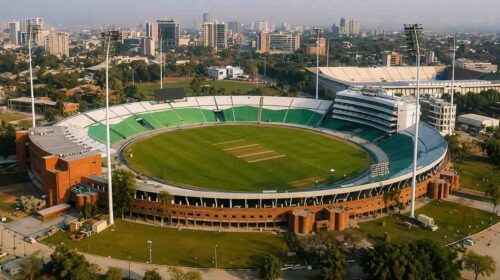

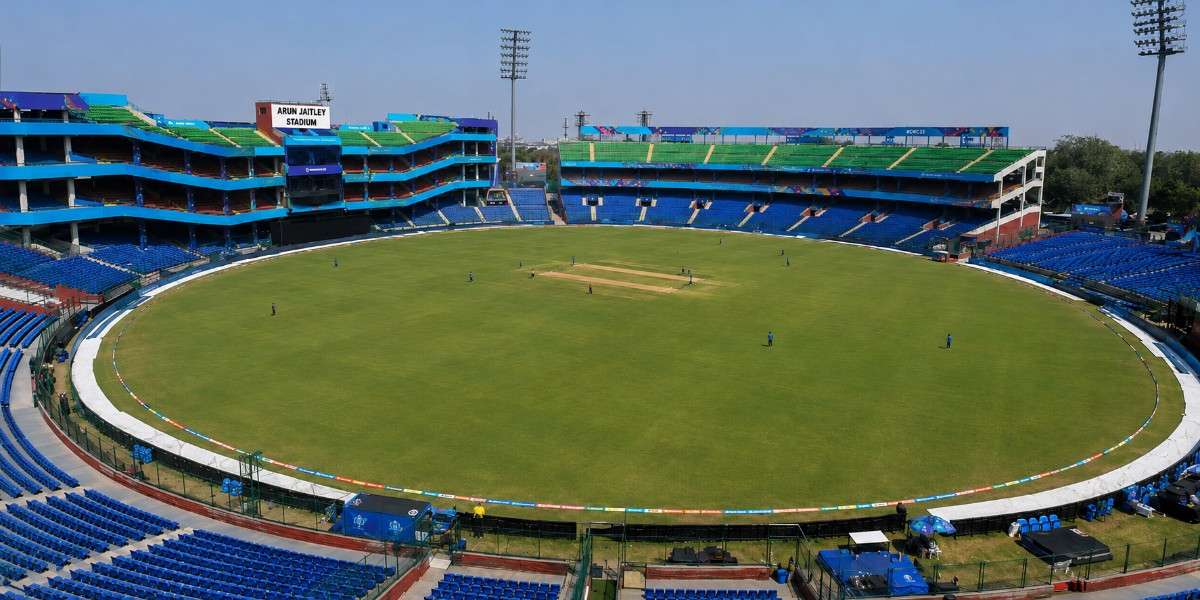
Arun Jaitley Stadium: History, Capacity, Pitch Report, Records and IPL Details
Delhi cricket has never needed a quiet stage. It has always carried noise, pressure, sharp opinions, and a long memory. Arun Jaitley Stadium reflects that personality well. The ground has old roots, a compact playing area, dry northern conditions, famous Test moments, and a strong link with Delhi’s cricket system.
This stadium was known for decades as Feroz Shah Kotla. Its newer name came in 2019, but the ground’s cricket story began much earlier. From Anil Kumble’s perfect ten to Sunil Gavaskar’s record-equalling century, the venue has given Indian cricket several moments that remain easy to recall.
Arun Jaitley Stadium Quick Facts
| Detail | Information |
| Stadium name | Arun Jaitley Stadium |
| Former name | Feroz Shah Kotla Stadium |
| City | New Delhi |
| Main area | Bahadur Shah Zafar Marg |
| Opened | 1883 |
| Current capacity | Around 35,200 to 37,306 for major cricket listings |
| Local cricket body | Delhi and District Cricket Association |
| Bowling ends | Stadium End and Pavilion End |
| Floodlights | Available |
| Home cricket use | Delhi domestic cricket and Delhi’s IPL side |
A Ground Built Into Old Delhi’s Cricket Memory
The stadium’s older name came from the nearby Kotla fort area, which connects the venue with a much older part of Delhi. This gives the ground a different feel from newer Indian stadiums. It is not a purpose-built outer-city venue with wide empty space around it. It belongs to a crowded, historic, central part of the capital.
This setting changes the matchday mood. Crowds move through busy roads, metro stations, narrow approaches, and police-managed entry points before reaching the stands. Once inside, the field feels close enough for the crowd to influence the rhythm of a match.
The venue has been part of Delhi cricket for generations. Domestic players, India players, overseas teams, and IPL cricketers have all passed through this ground. Its story is not polished in a modern way, but it has depth.
Why the Stadium Name Changed?
For many years, the ground was known as Feroz Shah Kotla Stadium. In 2019, it was renamed Arun Jaitley Stadium in memory of Arun Jaitley, who had served as president of Delhi’s cricket association and later became a senior public figure in India.
The renaming changed the stadium’s official identity, but cricket followers still use both names in conversation. Older fans often say Kotla because many historic matches were played under that name. Younger fans may know it through IPL fixtures and recent India matches.
This dual identity is important. The name changed, yet the venue’s cricket memory still carries the Kotla years.
Arun Jaitley Stadium Capacity and Layout
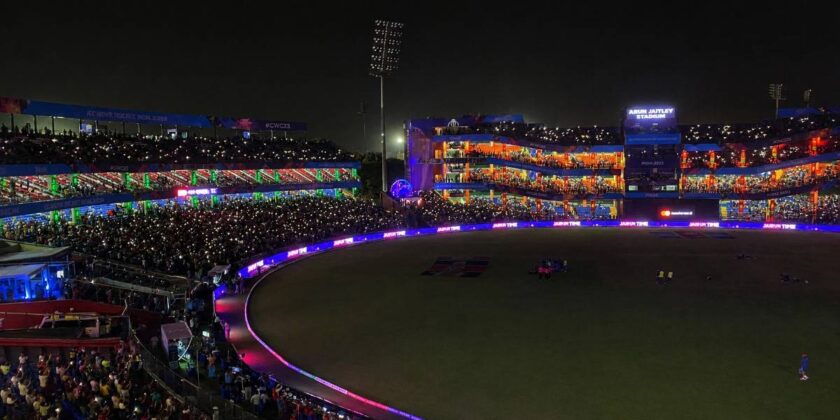
Arun Jaitley Stadium capacity is listed differently across major cricket references because match seating, renovation work, and event setup can affect the final number. The practical capacity sits in the mid-thirty-thousand range for major listings, while some older venue profiles use a higher figure.
For readers, the useful point is simple. This is a compact international ground rather than a giant stadium. The crowd is close to the field, and the playing area can feel tight during T20 games.
The two bowling ends are:
- Stadium End
- Pavilion End
The ground also has stands and pavilions named after major Delhi and Indian cricket figures. This gives the venue a local identity beyond match fixtures. It reflects a cricket city that has produced players such as Virat Kohli, Virender Sehwag, Gautam Gambhir, Bishan Singh Bedi, Ashish Nehra, and Rishabh Pant.
Arun Jaitley Stadium Pitch Report
The Arun Jaitley Stadium pitch report often depends on format, season, match timing, and surface preparation. Delhi’s pitch has generally carried a dry character, and the ground’s smaller dimensions can make limited-overs cricket move quickly.
In red-ball cricket, the surface has often helped spinners as matches progress. Batters can score once they adjust, but low bounce and turn can make long innings difficult later in the game. Fast bowlers need discipline because loose lengths can disappear on a small ground.
In white-ball cricket, the picture changes. Shorter boundaries give batters scoring options square of the wicket and straight down the ground. A flat surface can turn the match into a hitting contest. Yet slower balls, cutters, and spin can still work when the pitch grips.
Key pitch points include:
- Dry surfaces can help spinners.
- Smaller boundaries reward aggressive batting.
- Batters need quick adjustment to low bounce.
- New-ball movement is usually less central than surface pace.
- Slower balls can work well in T20 cricket.
- Dew can affect evening matches during some seasons.
Captains often read this venue through risk. A total that feels strong elsewhere may look chaseable here if the surface is flat. A slow pitch, however, can make even a medium score difficult.
Records That Define Arun Jaitley Stadium
Arun Jaitley Stadium records include several high-value cricket moments. The ground has seen huge Test scores, historic wickets, and important white-ball totals.
| Format | Major Record or Moment | Detail |
| Test cricket | Highest team total | West Indies scored 644/8 at the ground |
| Test cricket | Major Indian total | India scored 613/7 against Australia in 2008 |
| ODI cricket | Major modern total | South Africa scored 428/5 against Sri Lanka in 2023 |
| T20I cricket | Highest team total | India scored 221/9 at the venue |
| Individual bowling | Famous spell | Anil Kumble took 10/74 against Pakistan |
| Individual batting | Major milestone | Sachin Tendulkar scored his 35th Test hundred here |
The numbers tell only part of the story. Delhi has often been a place where skill and temperament are tested together. The surface can reward patient batting, but it can also pull spinners into the match once grip appears.
Anil Kumble’s Ten-Wicket Spell
No discussion of Arun Jaitley Stadium feels complete without Anil Kumble’s 10 wickets in a Test innings against Pakistan in 1999. It remains among the rarest achievements in cricket.
The spell had drama because a perfect ten needs skill, rhythm, support from teammates, and a pitch that keeps the bowler in the contest. Kumble’s accuracy made every batter play. As the wickets kept falling, the ground moved from excitement to disbelief.
This moment gave the venue a permanent place in cricket history. Even people who do not follow Delhi cricket closely connect this stadium with Kumble’s 10/74.
Batting Milestones at the Ground
The stadium has also hosted major batting landmarks. Sunil Gavaskar scored his 29th Test century here, equalling Don Bradman’s long-standing record. Sachin Tendulkar later scored his 35th Test hundred at the same venue, moving past Gavaskar’s record.
These moments matter because they connect different generations of Indian batting. Gavaskar represented discipline, technique, and survival against high-class fast bowling. Tendulkar represented range, balance, and long-term excellence across eras.
Delhi gave both players a stage for career-defining numbers. This adds weight to the ground’s history beyond one match or one format.
Arun Jaitley Stadium in IPL Cricket
Arun Jaitley Stadium IPL records draw attention because the venue can produce fast scoring and sharp turnarounds. Delhi’s IPL side uses this ground as its home venue, and the surface often creates an interesting balance between batting power and spin control.
T20 cricket here can move in bursts. A batter can change the game within two overs because boundaries are reachable. At the same time, a spinner who attacks the stumps can break momentum quickly.
IPL teams usually focus on five things at this venue:
- Protecting the shorter boundary.
- Using spin during the middle overs.
- Keeping pace off the ball when the pitch grips.
- Saving stronger death bowlers for set batters.
- Reading dew before deciding the chase plan.
This is not a ground where captains can relax after a strong powerplay. The match can swing late, especially when hitters keep wickets in hand.
Why Batters and Spinners Both Stay Interested?
At first glance, Arun Jaitley Stadium may look like a batting ground in T20 cricket. The boundaries help hitters, and a quick outfield can add value to timing. Yet the venue has never been only about batters.
The dry surface often gives spinners a chance. Bowlers who vary pace, use the crease, and attack the stumps can make scoring awkward. Batters who depend only on power may struggle when the ball grips or arrives slowly.
This balance makes the ground tactically interesting. Teams need power, but they also need patience. They need six-hitters, but they also need players who can rotate strike on a slow surface.
Matchday Experience for Fans
Watching cricket at Arun Jaitley Stadium Delhi feels different because the ground is inside a busy city pocket. Reaching the venue needs planning, especially during India matches and IPL games.
Fans should keep a few simple points in mind:
- Metro travel is usually easier than driving.
- Entry gates can feel crowded before toss time.
- Security checks may take longer during major games.
- Carrying fewer items helps at the gate.
- Seating sections should be checked before arrival.
The stadium’s location gives it character, but it also brings matchday pressure outside the gates. Fans who arrive early usually have a better experience.
Final Thoughts
Arun Jaitley Stadium is one of India’s oldest active international cricket venues, and its value comes from history as much as match results. The ground has seen famous Test spells, batting milestones, ODI power-hitting, IPL pressure, and Delhi’s long cricket journey.
Its compact layout, dry pitch, and old-city setting make it a venue with a clear personality. Some grounds impress through size. Delhi’s famous cricket ground leaves its mark through memory, pressure, and moments that stay with fans.
FAQs
Which metro station is nearest to Arun Jaitley Stadium?
Delhi Gate metro station is the closest practical stop for Arun Jaitley Stadium. ITO metro station can also work, depending on the entry gate and crowd movement on matchday.
Which pavilion at Arun Jaitley Stadium is named after Virat Kohli?
The Virat Kohli Pavilion is part of Arun Jaitley Stadium. It honours Kohli’s Delhi cricket roots and was unveiled during the stadium renaming event in September 2019.
Has Arun Jaitley Stadium hosted Cricket World Cup matches?
Delhi has hosted World Cup fixtures in multiple Indian editions, including 1987, 1996, 2011 and 2023. The ground keeps returning because it is central, established, and familiar for major international cricket.
What should fans avoid carrying inside Arun Jaitley Stadium?
Backpacks, large handbags, outside food, bottles, chargers, cameras, and bulky electronic items are best left at home unless the match advisory clearly permits them. A phone, wallet, ticket, and ID are safer
Why do people still call Arun Jaitley Stadium Kotla?
People still say Kotla because decades of scorecards, radio calls, newspaper reports, and childhood memories used the old name. For long-time Delhi cricket followers, the nickname feels natural even after the official renaming.